Mastering Algorithmic Trading: A Comprehensive Guide
Dive into the dynamic world of algorithmic trading with this thorough guide. We'll explore the essentials of programming, data analysis, and risk management to empower you to craft your own profitable systems. From identifying market opportunities to executing trades with precision, this guide provides a methodical path to mastering the art of algorithmic trading. Prepare to revolutionize your trading journey.
- Develop your own custom trading algorithms
- Examine vast amounts of market data
- Control risk effectively
- Evaluate your strategies with real-time simulations
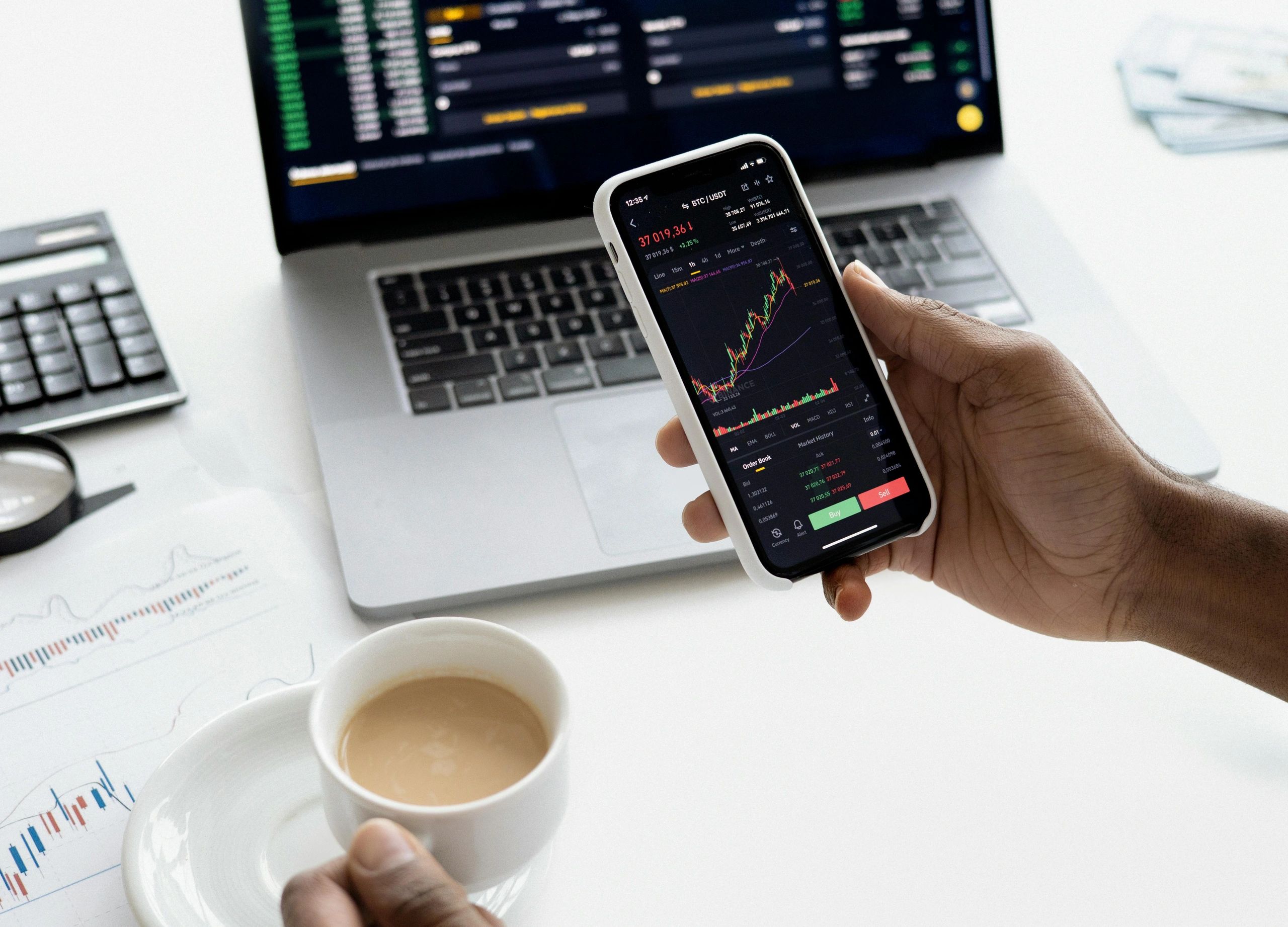
The Surge of Automated Trading Platforms
The financial landscape is constantly evolving, and one of the most noticeable trends is the ascendancy of automated trading platforms. These platforms leverage powerful algorithms to perform trades automatically, often at a speed unattainable by human traders.
As a result, they are gaining widespread acceptance among both institutional investors and professional traders. The advantages offered by automated trading platforms are diverse, including the potential for higher returns, minimized risk, and enhanced portfolio management.
However, the complexity of these platforms requires a certain level of market knowledge and understanding.
Testing Your Automated Trading Strategies
Before deploying any automated trading strategy into the real market, it's crucial to rigorously backtest its efficacy. Backtesting involves simulating your strategy on past market data to gauge how it would have behaved in different market conditions. This method allows you to identify potential strengths and adjust your strategy before risking assets.
- Consider various periods for your backtesting.
- Employ a comprehensive set of market data to ensure accuracy.
- Log your outcomes and interpret them critically.
Dive into Algorithmic Trading: A Beginner's Guide
Embarking on the journey of algorithmic trading can feel overwhelming at first. Nevertheless, with a solid understanding of the fundamentals and the right tools, you can successfully navigate this exciting field. Start by grasping the concepts of key trading terms like market orders, limit orders, and stop-loss orders. Next, delve into various algorithmic trading strategies, such as trend following, mean reversion, and breakout trading. Remember to start small, execute your code with a paper trading account before risking real capital. Continuous learning and adaptation are crucial for success check here in this dynamic market.
- Explore different programming languages commonly used in algorithmic trading, such as Python or R.
- Experiment with your strategies on historical data to evaluate their effectiveness.
- Connect with online communities and forums to learn from experienced traders and stay updated on the latest trends.
Building a Robust Automated Trading System
Constructing a resilient/a stable/a dependable automated trading system involves multiple/various/diverse key considerations. Firstly, you must implement/integrate/incorporate robust risk management strategies to mitigate/minimize/reduce potential losses. This entails/includes/comprises setting clear/definitive/explicit stop-loss orders and carefully/meticulously/diligently monitoring/observing/tracking your portfolio's performance constantly/frequently/periodically. Secondly, select/choose/opt for a reliable and secure/safe/protected trading platform that supports/facilitates/enables automated trading. Furthermore/Moreover/Additionally, conduct/perform/execute thorough backtesting/evaluation/analysis of your trading strategy on historical data to validate/verify/confirm its effectiveness. Finally, continuously/regularly/periodically optimize/refine/adjust your system based on market dynamics/conditions/trends and feedback/data/results.
Leveraging Machine Learning in Trading Algorithms
Machine learning approaches are transforming the landscape of trading by enabling algorithms to process vast amounts of information. These algorithms can uncover patterns and relationships that would be challenging for human traders to notice. By utilizing machine learning, traders can enhance their decision-making, implement trades more accurately, and potentially increase returns.
- Popular machine learning techniques utilized in trading include reinforcement learning, convolutional networks, and classification algorithms.
- Machine learning algorithms can be trained on historical market data to predict future price movements, identify profitable trading opportunities, and reduce risk.
- However, it is important to note that machine learning in trading is not a risk-free solution. These algorithms require careful design, ongoing adjustment, and a deep understanding of market dynamics.
Algorithmic Trading Strategies: A Deep Dive
Diving deep into the realm of quantitative trading unveils a world driven by mathematical models and automated algorithms. These strategies leverage real-time market data to identify trends, enabling traders to execute orders with efficiency. From fundamental analysis to complex statistical models, quantitative trading offers a broad spectrum of approaches. Exploring these strategies requires a strong foundation in finance, and the ability to adapt in a constantly changing market landscape.
Refining Your Algorithmic Trading Performance
Fine-tuning your algorithmic trading strategy is a continuous process that requires meticulous attention to detail and an adaptive approach. One crucial aspect is monitoring the performance of your algorithms rigorously. Implement robust metrics to track key factors such as profitability, risk aversion, and transaction frequency. Utilize backtesting methodologies to simulate historical market conditions and identify potential areas for optimization. Remember that market dynamics are constantly evolving, so regularly review and adjust your algorithms to maintain an edge in the ever-changing trading landscape.
The Psychology behind Automated Trading
The emergence of automated trading has altered financial markets. However, the psychological implications on traders remain a crucial subject. Understanding how investors behave with these advanced systems is essential for managing potential risks and harnessing the full potential of automated trading. One aspect is the influence of automation on trading strategies. While automated trading can improve efficiency and minimize emotional influences, it also raises the question of over-reliance on technology. Traders must strengthen their ability to analyze these systems, recognize potential problems, and make informed changes. Moreover, the emotional toll of automated trading should not be disregarded. The constant monitoring of complex data and systematic outcomes can lead stress, anxiety, and fatigue, emphasizing the need for healthy coping mechanisms and professional balance.
Managing Risks in Algo-Trading
One of the paramount considerations in algorithmic trading is effectively managing risk. These systems, while potentially highly profitable, can also be susceptible to sudden market movements. A well-defined risk management framework is essential to minimizing potential losses and preserving capital. This typically involves implementing strategies such as position sizing, proactively observing portfolio performance, and conducting thorough backtesting of trading algorithms before deployment in live markets.
Ultra-Fast Trading: Velocity and Performance
High-frequency trading (HFT) centers around the ability to execute trades at an incredible speed. Advanced programs are deployed to identify fleeting market shifts, allowing traders to exploit even the tiniest price variations. This agility is crucial for HFT's success, as it allows participants to surpass competitors and amplify their returns.
- However, the high speed of HFT can also poserisks for market stability.
- Legislative bodies are constantly striving to mediate the benefits and risks of this transformative trading strategy.
Leveraging Trading Indicators: Unveiling the Secrets
Dive into the dynamic world of automated trading signals and uncover their potential to revolutionize your investment strategy. These sophisticated algorithms sift through mountains of data, identifying profitable opportunities with lightning speed. Whether you're a seasoned trader or just starting your journey, automated trading signals can provide valuable insights and empower you to make informed decisions in the fast-paced financial markets.
- Unravel the intricacies behind these powerful tools.
- Discover the benefits of automated trading signals for traders.
- Learn how to select the best signals to suit your individual goals.
Gain a competitive edge in today's volatile market landscape with the power of automated trading signals.
Identifying Profitable Trading Patterns with Algorithms
Algorithmic trading has revolutionized the financial markets, enabling traders to evaluate vast amounts of data and identify profitable trading patterns. By constructing sophisticated algorithms, traders can streamline their trading strategies and maximize their profits. These algorithms interpret historical price trends, market indicators, and news data to generate buy and sell signals. Profitable trading patterns often manifest as recurring structures in price plots. Algorithms can detect these patterns with precision, providing traders with a tactical edge.
- Consider technical indicators such as moving averages, Bollinger Bands, and MACD can be incorporated into algorithms to identify potential buy and sell signals.
- Moreover, machine learning algorithms can evolve from historical data to forecast future price movements.
Trading's Horizon: Automation & More
The trading landscape is constantly evolving, with automation playing an increasingly prominent part. Algorithmic trading and high-frequency approaches are already shaping the way markets function. In the future, we can expect even more sophisticated technologies that will streamline a wider range of trading tasks.
Furthermore, emerging trends such as artificial intelligence (AI) and machine learning are poised to revolutionize the industry even further. AI-powered trading systems will be able to process vast amounts of data at unprecedented speeds, discovering market trends and executing trades with finesse.
- Therefore, the future of trading will likely be characterized by:
- Increased levels of automation and productivity
- More intelligent trading algorithms
- Greater market transparency
Ultimately, the human element will still play a vital role in oversight these automated systems and making informed decisions. The future of trading is a integrated partnership between technology and human expertise.
Algorithmic Trading vs Manual Trading: A Comparison
In the dynamic realm of finance, traders constantly strive for an edge. Two prominent approaches dominate the trading landscape: algorithmic trading and manual trading. Algorithmic trading, also known as automated trading, relies on complex software to execute trades based on predefined parameters. On the other hand, manual trading involves human traders making decisions based on market analysis, intuition, and experience.
- Algorithmic trading offers speed and efficiency, executing trades in milliseconds and eliminating emotional biases.
- Manual trading allows for more control and adaptability to changing market conditions.
Choosing between these methods depends on individual approaches, risk tolerance, and resources.
Ethical Considerations in Algorithmic Trading
The domain of algorithmic trading presents a host of ethical issues. As algorithms increasingly drive financial decisions, it becomes crucial to scrutinize potential flaws that could perpetuate existing inequalities. Transparency in algorithmic design and function is paramount to maintain market integrity. Furthermore, the likelihood for abuse through algorithmic strategies raises significant ethical dilemmas.
- Engineers must strive to create algorithms that are just and do not discriminate against certain participants.
- Regulations need to be developed to monitor algorithmic trading activities and minimize potential harms.
- Public awareness of the ethical consequences of algorithmic trading is critical to encourage responsible and open market practices.
Creating a Custom Automated Trading Platform
Venturing into the realm of automated trading demands a deep understanding of financial markets and programming. Building your own custom platform presents an opportunity to tailor your strategies and gain granular control over your investments. This endeavor can be complex, requiring expertise in areas such as algorithmic trading, data analysis, risk management, and software development. Start by specifying your trading goals and the type of assets you intend to trade. Then, select a suitable programming language and framework to build your platform. Leverage existing libraries and APIs to streamline the integration with market data sources and order execution systems. Thoroughly test your algorithms in simulated environments before deploying them with real capital. Continuously monitor and refine your system based on performance and market conditions.
Expert Technical Analysis for Quantitative Traders
Mastering advanced technical analysis is crucial for algorithmic traders seeking to maximize their success rate. This involves delving into complex indicators, patterns, and strategies that go beyond the basic analysis of price movements. By implementing these advanced techniques, traders can identify high-probability trading signals and mitigate potential drawbacks.
- Implement statistical models to support technical research
- Explore complex formations in price data
- Create custom strategies based on unique market dynamics
- Merge technical analysis with other analytical techniques
Continuous learning is essential in this dynamic market landscape. Algorithmic traders must evolve their tactics based on evolving market dynamics. By staying at the leading position of technical analysis, traders can boost their chances of achieving consistent success.
Successful Trading Strategies Through Algorithms
This section delves into the realm of algorithmic trading success by examining real-world examples. We'll investigate strategies that have produced significant returns, highlighting the power of systematic trading approaches. From high-frequency trading to momentum following algorithms, we'll uncover the factors that contribute to sustainable performance in the dynamic financial markets.
- Discover the strategies employed by successful algorithmic traders.
- Assess real-world trading performance to understand what works.
- Develop insights into the technical and tactical aspects of algorithmic trading.
Harnessing the Power of Data in Trading
Data has become an invaluable asset in modern financial markets. Traders are increasingly leveraging data-driven strategies to evaluate market trends, identify profitable opportunities, and mitigate risk. By incorporating sophisticated algorithms and scrutinizing vast datasets, traders can gain a competitive advantage in the highly fluctuating world of finance.
These data-driven strategies often involve mathematical modeling to estimate future price movements, discover patterns, and optimize trading decisions. Moreover, the use of real-time market data allows traders to react swiftly to changing situations.
The power of data-driven trading strategies lies in their ability to impartially gauge market information, reduce subjective decision-making, and ultimately improve trading results.